Tuckpointing and mortar joint repair in Broken Arrow
Published pricing · Call (918) 362-4398
Repointing the failed mortar joints on a Broken Arrow house runs $1,200 to $5,500, or $8 to $20 per square foot of wall that needs it, and most jobs are done in two to four days. Mortar is the sacrificial part of a brick wall. It is meant to be softer than the brick, take the movement, and be replaced every 30 to 50 years. The brick veneer subdivisions built here from the mid 1970s through the 1990s are right at that age now, and our clay soil has been flexing those walls twice a year the whole time. We grind the failed joints out three quarters of an inch deep, never with a wide blade that chews the brick edges, match the mortar color and texture so the repair disappears, and pack the joint in lifts. A crack that is still moving gets a control joint cut so it stops reopening.
What you are probably seeing
- Mortar you can scrape out with a car key, or that has already washed out below the weep line
- Stair-step cracks running diagonally from a window or garage corner
- Hairline cracks in every joint on one wall, usually the one facing the afternoon sun
- A long horizontal crack at the same course all the way across, often above the slab
- Joints that were caulked by a previous owner instead of repointed
- Brick that rocks when you push on it near the top of a wall or at a corner
Why 1980s and 1990s mortar is failing now
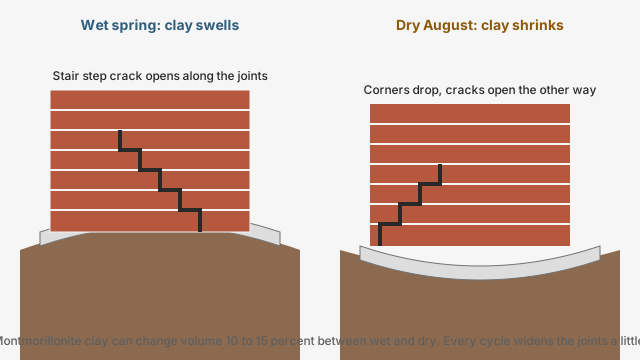
Most of the houses between the Broken Arrow Expressway and the Creek Turnpike went up when builders were laying brick fast and mortar was mixed on site by the bag. Thirty to forty summers later the lime has leached out, the joints have shrunk, and every wet spring the clay under the slab lifts one corner while the dry August drops it back. The joints take that movement. The brick does not. So the cracks show up in the mortar first, which is exactly where they should, and repointing catches them before water follows the crack behind the veneer.
The one thing not to do is caulk them. Caulk over a mortar joint holds for a season, then it separates, and now water gets in and cannot get back out. We find caulked joints on about a third of the houses we look at in Broken Arrow and it always adds a step to the repair.
Matching the mortar so the repair disappears
Half of a good tuckpointing job is the color. A buff mortar from 1985 has aged with dust and sun, and a bright gray patch next to it looks worse than the crack did. We pull a small sample of the existing mortar, match the sand color and the joint profile, and test a patch in a low spot before doing the wall. On a raked or grapevine joint we tool it to the same profile. On older solid brick in the Rose District downtown we use a softer, lime-rich mix so the new mortar does not out-muscle the old brick.
Strength matters as much as color. Modern Type S mortar is too hard for pre-1950 brick and will crack the brick instead of itself. For the brick veneer stock across most of Broken Arrow, Type N is right, and that is what goes in.
Repointing versus taking the wall down
If the brick is sound and the wall is plumb, repointing is the answer, and it is a fraction of a rebuild. We only recommend taking brick down when the wall has bowed out from the framing, the ties behind it have rusted through, or so much brick has spalled that there is nothing to point between. On a house that has settled, we also want to know the foundation has stopped moving before we invest in the joints, and we will say so if it has not.
Repointing plus a breathable repellent afterward is the combination that lasts. Fresh joints are the most absorbent part of the wall for the first year, and sealing them after they cure keeps the next 30 years of rain on the outside.
How the work goes, step by step
- 1
Hose test and crack map
We mark every failed joint and every moving crack, and check the foundation corners for active settlement.
- 2
Mortar match
A sample of the existing mortar goes back to the shop and we bring a matched batch, then test a patch on the wall.
- 3
Grind and clean
Joints ground out three quarters of an inch deep with a narrow blade, then blown clean and dampened.
- 4
Pack in lifts
New mortar packed in quarter-inch lifts and tooled to the original profile. Moving cracks get a control joint cut and sealed.
- 5
Cure, then seal if you want it
Joints cure for a week, then a repellent can go on the whole wall so the fresh mortar stops drinking.
What it costs
Off the same table as everything else. The full cost guide has all twelve rows and the permit notes.
| Job type | Typical range | What moves the price |
|---|---|---|
| Leak source inspection with hose test and moisture meter | $125 to $175per visit, credited back if you hire us | Two-story walls that need a ladder on every elevation, and chimneys we have to get on the roof to test |
| Mortar joint repointing and tuckpointing | $1,200 to $5,500per job ($8 to $20 per sq ft of wall) | Joint depth, matching a 1980s buff or gray mortar, scaffold height, how many bricks have to come out and go back |
| Stair-step and foundation-edge crack repair | $900 to $3,500per crack run | Whether the crack is still moving with the soil, length, whether a control joint has to be cut so it stops reopening |
Get a price for this job
Address first, then what you see. We reply with a range off the table and set a time for the hose test.
Questions about tuckpointing and mortar repair
- How much does tuckpointing cost in Broken Arrow?
- Between $1,200 and $5,500 for most houses, or $8 to $20 per square foot of wall that actually needs it. A single problem wall on a ranch usually lands near $1,500. Two-story walls and full-house repointing push toward the top.
- What is the difference between tuckpointing and repointing?
- Repointing is removing failed mortar and packing new mortar in. Tuckpointing is the older word for the same job, and locally people use them interchangeably. We do the same grinding, matching and packing either way.
- Will the new mortar match?
- Yes, close enough that you have to look for it. We match the sand color, the joint profile and the strength of the original, and test a patch first. Fresh mortar looks slightly lighter for a few months, then weathers in.
- Should I fix the foundation before repointing?
- If the corners are still moving, yes. We check for active settlement on the first visit and will tell you if the house needs piers before the joints are worth doing. Most cracks we see in Broken Arrow are seasonal clay movement, not failure, and repointing with a control joint handles those.
- Can you repoint in the winter?
- On days above 40 degrees and rising, yes. We do not point when the wall will freeze within 24 hours, so January work depends on the week.