Sealing brick versus painting it in Oklahoma
Written by the owner of Haikey Creek Masonry Waterproofing, Broken Arrow. Published 2026-09-27.
A penetrating silane and siloxane water repellent is the right product for exterior brick in Oklahoma, and paint or a film forming sealer is usually the wrong one. The repellent soaks a quarter inch into the brick and mortar, bonds to the pores, and makes the wall shed liquid water while still letting water vapor out. Paint and acrylic sealers sit on the surface as a film. They look good for a year or two, then water that gets in through a hairline joint cannot get out, and the freeze and thaw cycles we get every winter pop the face of the brick off behind the film. Whole house sealing with a repellent runs $1,000 to $3,500 and carries a 10 year manufacturer warranty; stripping failed paint or sealer before that can cost as much again.
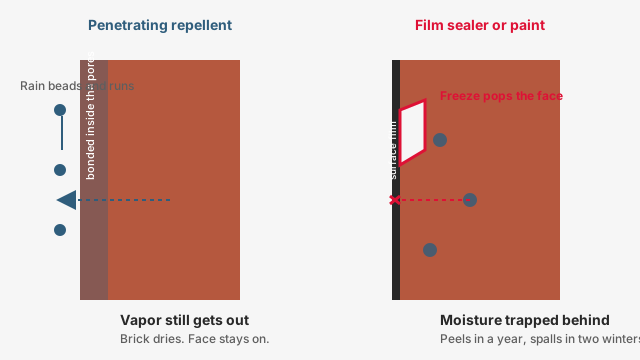
What a breathable repellent does
Silane and siloxane are silicone chemistries that react with the minerals in brick and mortar to form a water repellent layer inside the pores rather than on top of them. Liquid water beads and runs off. Vapor still passes, so a wall that gets damp from the inside, from a bathroom or from the ground, can still dry to the outside. The Brick Industry Association technical note on colorless coatings makes the same distinction: only breathable water repellents belong on exterior brickwork, and film forming coatings should not be applied to it.
A properly applied repellent is invisible. No gloss, no darkening, no change to the brick color. If a product changes the look of the wall, it is a film.
Why film and paint fail here
Oklahoma brick gets wet from both sides. Wind driven rain hits the face, and the clay under the slab keeps the base of the wall damp for weeks every spring. Whatever water gets into a painted wall through a joint or a crack has to leave through the paint, and it cannot. It sits in the brick, freezes on the first cold night in December, and pushes the face off in a plate. Painted brick houses in Tulsa from the 1990s show this on the north walls all over Midtown.
Film sealers do the same thing with more subtlety. The gloss dulls in a year, the film peels in sheets, and the brick under it has a mottled dark pattern where water was trapped. Removing it means chemical strippers and a lot of labor before the wall can be sealed properly.
When painting brick is fine
Painted brick can be done well if the paint is a mineral silicate or a vapor permeable masonry paint, the joints were repointed first, the base of the wall drains, and the owner accepts repainting every ten years or so. It is a design choice with a maintenance cost. It is not a waterproofing method, and anyone selling it as one is going to leave you with spalled brick.
What sealing costs and how long it lasts
A whole house repellent application is $1,000 to $3,500 depending on wall area and stories, or $1.50 to $3.50 per square foot of wall. The product carries a 10 year manufacturer warranty on properly prepared brick and we expect 10 to 15 years before a reapplication in our climate. Repointing open joints first is extra and required; sealing over open joints wastes the product.
Sources
Questions this guide gets
- How do I know if my brick was already sealed with a film?
- Spray water on it. If the water beads on a glossy surface and the brick looks slightly darker or shinier than raw brick, it is a film. If the water beads with no change in look, it is a penetrating repellent. If it soaks in, it is unsealed.
- Can you seal over paint?
- No. A penetrating repellent has to reach the brick. Paint or film has to come off first, which we quote separately after seeing how well it is bonded.
- Does the sealer stop efflorescence?
- It stops rain from carrying salts to the face. It does not stop ground water, so a wall with a wet base still needs weep holes or drainage before the sealer is worth doing.
- Is sealing worth it on a new house?
- Yes, once the mortar has cured for a year and any construction efflorescence has cleared. New brick sealed early stays clean and the joints last longer, which is cheaper than repointing them at year twenty.
Have us look at your wall
Address, then what you see. A range off the published table and a time for the hose test.