Spalling brick and efflorescence repair in Broken Arrow
Published pricing · Call (918) 362-4398
Replacing spalled brick in Broken Arrow costs $25 to $45 per brick, usually $600 to $2,500 for a job, and cleaning efflorescence off a wall and sealing it runs $800 to $2,500 per elevation. Both problems are the same story told two ways: water got into the brick and could not get back out. Spalling is what happens when that water freezes, expands about nine percent, and pushes the face of the brick off. Efflorescence is what happens when it evaporates instead, leaving the salts it dissolved from the mortar as a white crust on the surface. Scrubbing the crust or swapping the brick treats the symptom. We do that, but we also hose test to find where the water is getting in, fix that path, and then seal the wall with a breathable repellent so the cycle stops.
What you are probably seeing
- Brick faces flaking off in thin plates, worst at the bottom three courses and around the chimney
- White, powdery or crusty deposits on brick or mortar that come back after you wash them
- Brick that has gone from smooth to pitted on the wall that faces the driveway sprinklers
- Green or black staining below a window sill or at a downspout splash zone
- A rusty steel lintel above a garage or window with the brick above it cracked
- Salt crust inside the garage on the block or brick where the slab meets the wall
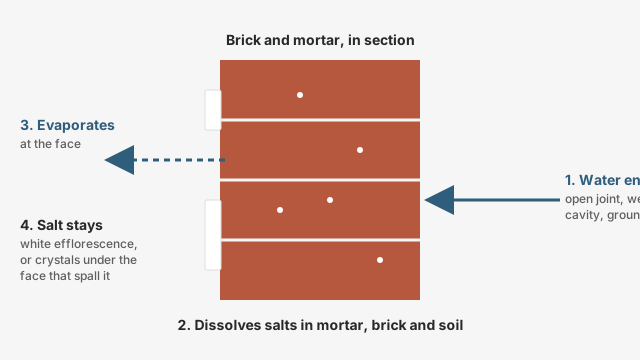
Why the bottom courses go first
On a Broken Arrow brick veneer house the lowest three or four courses take water from two directions. Rain and sprinklers hit them from the front, and the slab and the wet clay around it feed them from below. If the wall has no weep holes, or the weep holes were mortared shut by a painter, that water has no way out except through the brick face. Add a January freeze and you get the flaking pattern we see on almost every 1980s house on the west side of town.
The chimney is the other hot spot, for the same reason. It is the most exposed masonry on the house, the crown usually has a crack in it, and water runs down inside the brick column all winter. Spalled chimney brick is on our chimney page, but the fix logic is identical.
Replacing the brick so it matches
A spalled brick cannot be patched. The face is gone and what is left drinks water faster than ever. We cut the damaged brick out, clean the pocket, and lay in a matched replacement. Matching is the hard part on a house built in 1988 by a builder who is long gone. We keep a stock of common Tulsa-area brick from the Acme and Elgin-Butler runs that dominated those subdivisions, and for anything unusual we source from salvage yards or pull brick from a hidden spot like behind the air handler.
If the brick above a window or garage is spalling in a band, the cause is often a rusted steel lintel swelling as it corrodes. In that case the lintel comes out, gets replaced with galvanized, and the brick goes back with proper flashing above it. Doing the brick alone on a rusting lintel buys you two years.
Efflorescence: clean it once, then stop it
The white crust comes off with a stiff brush and, if needed, a mild masonry cleaner and a low-pressure rinse. Never a high-pressure washer on old brick, which opens the surface and makes everything worse. The important question is whether the source is still active. Efflorescence on a new house in the first two years is often just construction water leaving the wall and it stops on its own. Efflorescence that keeps coming back on a 20-year-old house means water is still moving through the wall, and we hose test to find the path.
Once the path is closed, whether that is repointing, weep holes, or moving a downspout, the wall dries, and a silane and siloxane repellent keeps rain out of the face so the salts have nothing to ride to the surface.
How the work goes, step by step
- 1
Hose test and moisture readings
Where is the water coming from: the face, the joints, the slab line, a lintel, or a chimney crown? The fix depends on the answer.
- 2
Brick match
We identify the brick and bring matched replacements, or pull from a hidden spot on your own house if nothing else matches.
- 3
Cut out and replace
Spalled brick removed, pockets cleaned, new brick set with matched mortar. Rusted lintels replaced with galvanized.
- 4
Clean the efflorescence
Stiff brush, mild cleaner where needed, low-pressure rinse. Never a pressure washer on old brick.
- 5
Close the water path and seal
Weep holes, joints, or drainage fixed as needed, then a breathable repellent on the whole elevation.
What it costs
Off the same table as everything else. The full cost guide has all twelve rows and the permit notes.
| Job type | Typical range | What moves the price |
|---|---|---|
| Leak source inspection with hose test and moisture meter | $125 to $175per visit, credited back if you hire us | Two-story walls that need a ladder on every elevation, and chimneys we have to get on the roof to test |
| Spalled and cracked brick replacement | $600 to $2,500per job ($25 to $45 per brick) | Finding a matching brick, count, a rusted steel lintel over a window or garage that has to come out with them |
| Efflorescence and stain removal, then sealing | $800 to $2,500per elevation | Whether the salt source is still wet behind the wall, the cleaner the brick will tolerate, how much of the wall is coated |
Get a price for this job
Address first, then what you see. We reply with a range off the table and set a time for the hose test.
Questions about spalling and efflorescence repair
- How much does it cost to replace spalled brick?
- $25 to $45 per brick, which usually comes to $600 to $2,500 for a job. A rusted lintel adds $400 to $900 for the steel and the brick above it. If dozens of bricks have failed on one wall, repointing and sealing the rest of the wall at the same time is cheaper than coming back.
- Is efflorescence harmful to the brick?
- The powder itself is harmless, it is just salt. What it tells you is that water is moving through the wall, and that water is what causes spalling and mortar loss. Treat it as a warning, not a stain.
- Can I pressure wash the white stains off?
- Please do not. High pressure opens the brick surface and drives water into the wall. A stiff brush and a garden hose handle most efflorescence, and we use a mild cleaner for the stubborn spots.
- Will the replacement brick match?
- Usually within a shade, and it weathers in within a year. We keep the common Tulsa-area brick runs in stock and test the match against your wall before cutting anything out.
- Why does the flaking always start at the bottom of the wall?
- The bottom courses get water from the sprinklers and rain in front and from the slab and wet clay behind. Without weep holes that water sits in the brick, and the first hard freeze pops the faces. Weep holes and sealing stop it.